





Hellmann: Rewriting the pulse of healthcare logistics
Corporate leadership is the discipline of aligning strategy with people — creating clarity and building teams that deliver results because they feel trusted to lead from where they stand.
Anna Mansurova, Head of Healthcare IMEA and Managing Director – Hellmann Calipar Healthcare Logistics reflects on close to two decades at Hellmann and the leadership shifts that shaped her approach to building resilient, patient‑focused logistics ecosystems across IMEA. From Dubai’s strategic rise to the complexities of KSA and India, she outlines how innovation, empathy, and regulatory precision are redefining healthcare supply chains.

GSC: With close to two decades of experience at Hellmann, rising to lead Healthcare IMEA, looking back, what were the most pivotal decisions or disruptions that shaped your leadership approach – and how have they influenced Hellmann’s healthcare logistics strategy today?
Anna Mansurova: Thank you for this important question, and I’m glad we are starting with it. Being part of Hellmann for over 18 years now, my connection to the company’s values is something that has remained constant throughout these years. A strong focus on our people and customers, combined with ambition and the freedom to develop new solutions, has always been central. The emphasis on the people aspect, however, developed more over time.
A defining moment was a setback in an earlier leadership role, which in hindsight became the catalyst for my personal transformation. This shift toward a more reflective and empathetic leadership style significantly changed how we work together as a team. In my role, I focus on identifying opportunities through a customer lens, setting the direction, and then stepping back to allow teams the space to develop the right solutions. Continuous learning and adaptation are essential to how we collaborate and evolve. Our focus on customers, and ultimately patients, guides where we go and what we do next.
GSC: Dubai has positioned itself as a regional distribution powerhouse for the GCC. From your vantage point, what are the structural advantages that competitors still underestimate, and what bottlenecks remain that the industry isn’t addressing honestly enough?
AM: In my view, this success is the result of clear alignment between an ambitious vision and strategy, and the ability to execute it at speed and scale. Thinking about ecosystems is equally important. The UAE, in particular has been very successful in creating logistics ecosystems and directing resources into world-class infrastructure, enabled through interconnected systems of port and regulatory authorities. When considering existing constraints, recent events have demonstrated how much of the critical flow still depends on a single entry and exit point. Creating alternative routes will further strengthen the resilience of the GCC’s position as a regional and global distribution leader.
GSC: Hellmann has expanded its healthcare logistics expertise significantly in the UAE, KSA, and India. What are the most critical differences in healthcare logistics maturity across these markets, and how do those differences shape your investment and operational priorities?
AM: Those markets are structurally different, driven by differences in macroeconomic, geographical, and demographic factors. For example, Saudi Arabia is undergoing rapid transformation, investing heavily in world-class logistics infrastructure to efficiently connect the country from west to east. The development of healthcare-specialised logistics hub-and-spoke systems to enable compliant delivery to remote areas will be one of the most interesting challenges to solve.
India is a very mature market, ranked number seven worldwide in terms of pharmaceutical export value. Competition there is equally high. The key differentiator there will be ability to execute at the most cost-effective manner. Having said that, the environment is continuously changing, with GLP-1 therapies losing patent protection, opening up a completely new playing field and increasing the need for cold chain logistics capabilities. In the UAE, the driver is innovation and finding new ways to serve the market and the region in a way that brings value to our customers and ultimately to patients.
GSC: With the growing need for raw materials and veterinary medication storage, how is Hellmann adapting its infrastructure and compliance frameworks to meet increasingly complex regulatory and quality assurance demands across IMEA?
AM: This builds on our existing base of mature and GDP-compliant QMS systems. From a process perspective, we will always adapt to the specific product requirements, followed by implementation into our operations. In terms of infrastructure, we have invested in DG capabilities to accommodate dangerous goods classes of certain raw materials and further expanded specialised storage areas such as cold rooms and liquid nitrogen storage facilities. Furthermore, route risk assessment and validation of specialised packaging tailored to the specific route are important steps for compliant transport execution.
GSC: You recently opened your fifth facility in Dubai. What gaps in the regional healthcare supply chain does this facility specifically address, and how does it change Hellmann’s competitive positioning in the GCC?
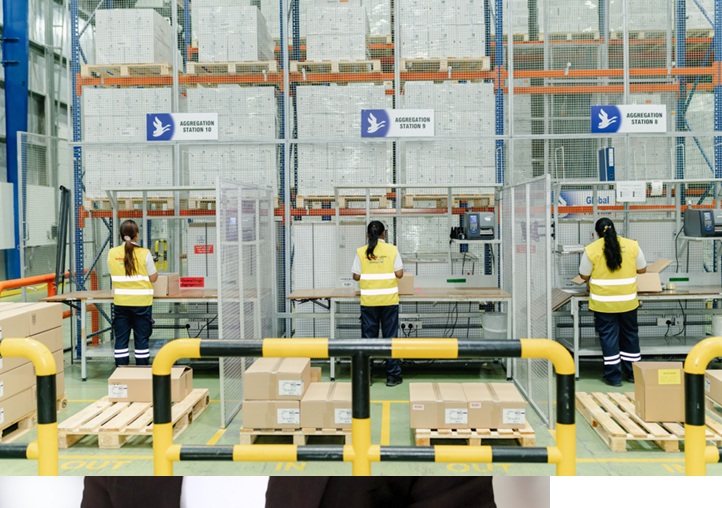
AM: This extension is a natural step for us in supporting the growing needs of our existing customers and upcoming new partnerships. Continuing to provide solutions to our customers is very important to us, as we maintain partnerships that span more than 10 years with many of them. This positions us as a reliable and expert solution provider in the region, supporting further expansion. The new facility is also built to the latest standards and incorporates efficient and sustainable technologies, which equally reflects Hellmann’s commitment to its sustainability goals.
GSC: Regional disruptions—from Red Sea tensions to shifting trade lanes—have exposed vulnerabilities in traditional transport models. How is Hellmann redesigning multimodal solutions to maintain resilience without driving up costs for healthcare clients?
AM: Hellmann’s regional and global setup enables us to work as one team, finding multimodal solutions that span across countries and regions. A recent example is an Air/Road solution into Iraq via Turkey, which was executed with full temperature integrity – this is a success of our regional team. When seafreight routes were disrupted, we were able to execute roadfreight solutions from Europe into the GCC, leveraging the expertise of our European teams.
GSC: Value added services are becoming a differentiator in healthcare logistics. Which services are now mission critical for pharmaceutical and medical device clients, and where do you see the next wave of innovation emerging?
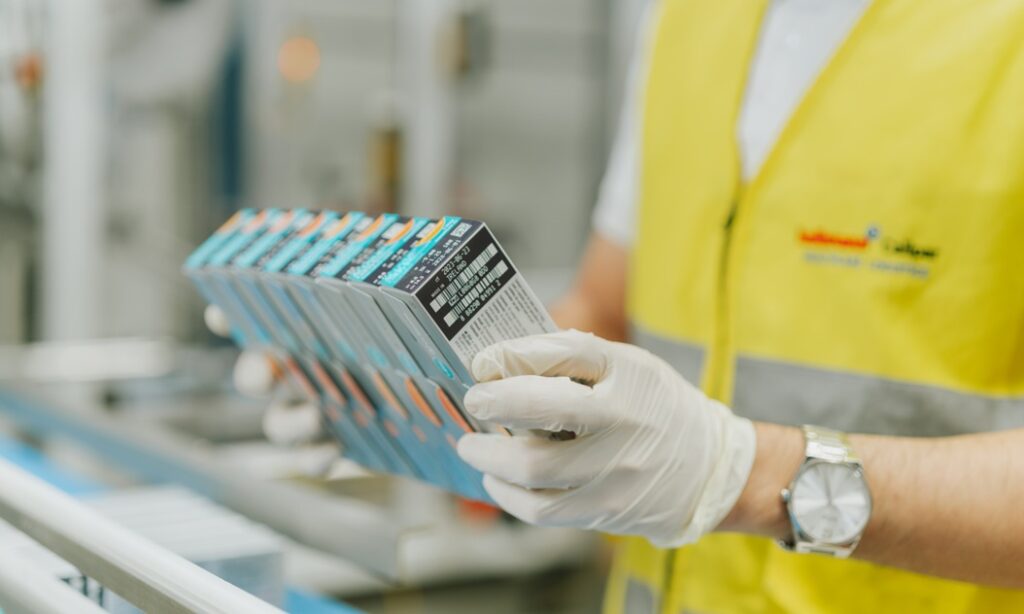
AM: Customisation to final market requirements is key. This is mainly driven by regulatory requirements. In Pharmaceutical, we anticipate wider adoption of track-and-trace regulations across the region. In medical devices, depending on the country, this will remain focused on fine-tuning specific language and artwork requirements.
GSC: Temperature controlled logistics is evolving rapidly. How is Hellmann integrating next generation cold chain technologies—from real time monitoring to predictive analytics—to strengthen last mile reliability in high-risk markets?
AM: Digital capabilities are one of the core pillars of Healthcare infrastructure. Solutions that our customers appreciate include integrating real-time visibility into a single platform, providing a consolidated view of all shipment positioning, temperature, humidity, and CO₂ emissions, as well as the ability to look up related transport documentation. These platforms allow proactive interventions, which are executed by our specialised healthcare teams.
GSC: Regional hubs are increasingly central to global supply chain strategy. What are the biggest misconceptions companies have when shifting distribution points into a regional hub model, especially regarding change management of cold chain flows?
AM: One of the biggest misconceptions is viewing this as a purely logistics cost exercise, focusing only on whether an increase in warehousing and inventory carrying costs can be offset by transportation efficiency. Very often the biggest impact of improved patient access and eventually increase in market share, gets overlooked. A holistic approach, including risk mitigation and supply chain resilience considerations, must be incorporated when building the business case for the Regional Hub model. On the technical side, reconfiguring cold chain flows would require revalidating packaging and routes, reassessing risks, and building back-up solutions.
GSC: Geopolitical volatility is reshaping supply chain maps across IMEA. How do you balance the need for route stability, regulatory compliance, and sustainability while still meeting the speed and cost expectations of healthcare manufacturers?
AM: It is impossible to balance them all at the same time; some elements are mutually exclusive. In a volatile environment, speed and resilience prevail, and this will come at a higher cost. However, there are non-negotiables you do not deviate from, such as regulatory compliance and your obligations to the continuity of product supply. Taking care of those priorities, while reassessing what requires adjustment to offset the increased cost, is a continuous exercise. And the answers and solutions will keep changing. This is the beauty and the challenge of the healthcare supply chain. And the biggest reward is knowing that everything that you do improves or saves someone’s life at the end of that chain.