





Making the transition towards warehouse automation
By Cosmin Sebastian Ilie, Managing Director, UAE & MEA Export, SSI SCHAEFER
Supply chains globally are increasingly complex and unpredictable. Ongoing disruptions due to geopolitical tensions are impacting business operations. In the short to medium-term, companies are likely to experience higher costs, longer lead times, labour shortages, and leaner inventories.
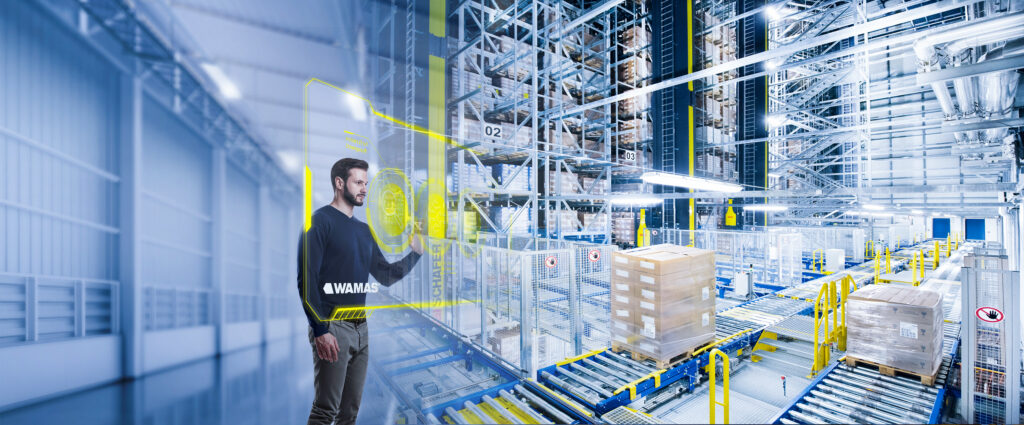
A phased approach to warehouse automation, supported by the right software steps up resilience, efficiency, and cost control. Be it semi-automated or fully automated, automation delivers a faster return on investment while keeping businesses competitive.
Starting automation today will future-proof warehouse operations and achieve operational excellence as the business environment evolves.
Manual warehouses have their limitations
Intralogistics has come a long way since the days of floor stacking. Pallet racking systems are the cornerstone of warehouses today. But an entirely manual set-up may not be the most effective use of resources for many businesses. This is especially so in a time where customers’ expectations are on the rise with many warehouses handling a wide range of SKUs and a greater volume of orders.
While capital expenditure may be lower, a manual warehouse operation using conventional shelving and pallet racking systems will result in decreased productivity and increased costs.
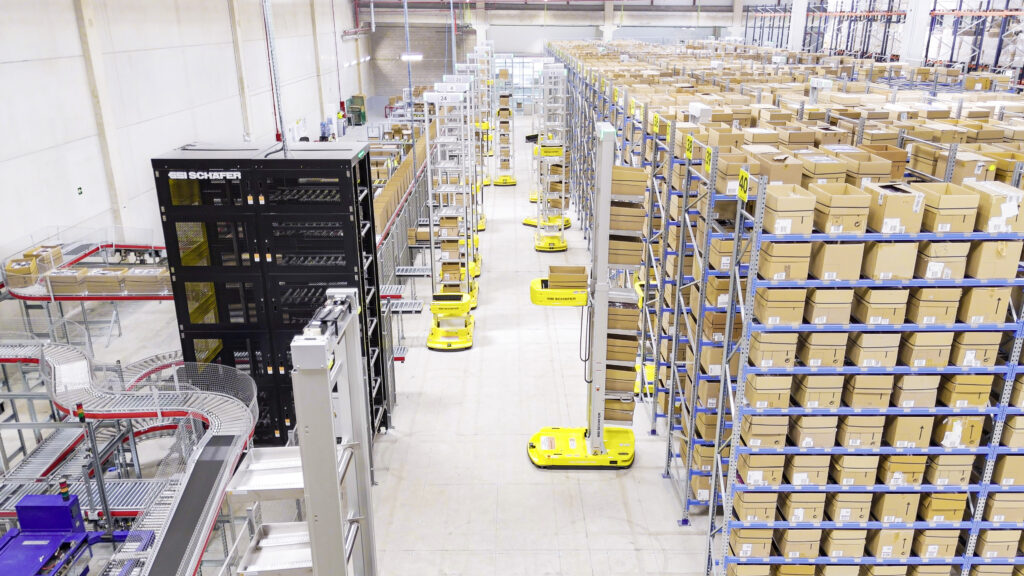
Since the processes are labor-intensive, there is an increased risk of errors, which in turn lead to longer delivery times, and a higher rate of returns. For the business, that translates to lower customer satisfaction and in turn, customer attrition risk.
Take the example of picking. Manual picking operates on a person-to-goods concept. The picker manually retrieves the good by walking or driving the forklift to the storage location. Less experienced workers may not be familiar with the picking routes within the warehouse. When a warehouse is full, the goods may be placed elsewhere, and it will take a longer time to search and retrieve the good.
Automation enhances material flow efficiency
Automation makes day-to-day operations more efficient, reliable, and transparent. This is particularly the case with routine processes. Companies can save time and money while improving speed and accuracy.
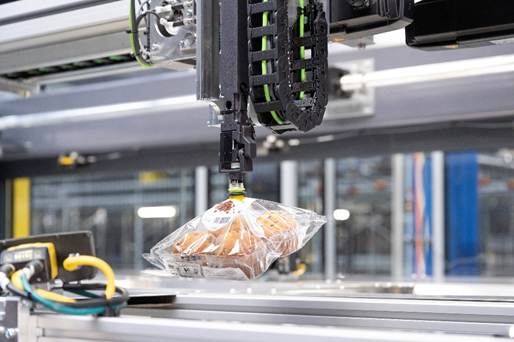
Another benefit of automation is the ability to store more goods within the same floor area. That’s because automated systems maximize utilization by making use of every corner of the warehouse. And vertical space can be leveraged, increasing storage capacity significantly without expanding the floor area. Whether it’s a fully automated high‑bay warehouse or semi‑automated solutions such as vertical lift modules and mobile robots, automation enables a tremendous boost in storage density.
More of this article can be found on https://globalsupplychainme.com/digital-issues-2026/may-2026/